

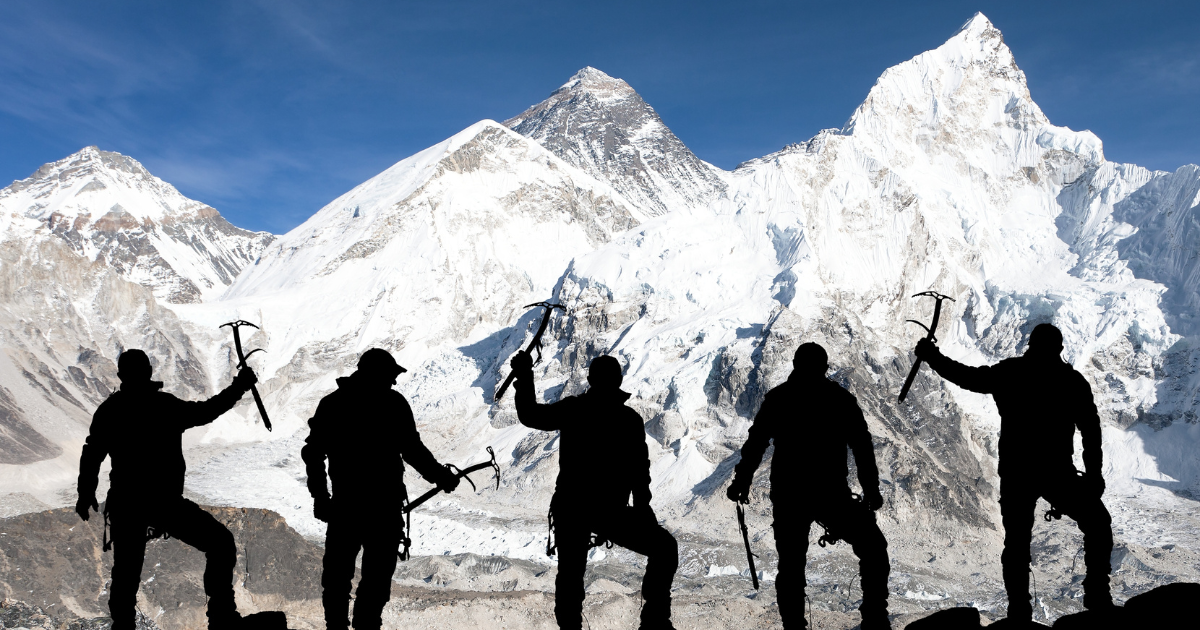
Mount Everest and its climbers, via DanielPrudek
When social media rose to popularity and technology greatly improved, it became much easier to document and share major achievements, even ones as rare as climbing Mount Everest. Before, the only way one could physically document their journey was by carrying a clunky film camera and hoping it would withstand the mountain’s climate so they could take that iconic picture at the top. Now, climbers have a GoPro camera taped to their foreheads that takes high-quality pictures and videos of the entire journey to the summit, and smartphones that record daily vlogs from the comfort of the camps.
Climbers today come down from the mountain with a personal documentary of the journey already made and ready for streaming. Instead of all this footage staying in their private album, many decide to share the unique experience with others, which is exactly what social media is here for. That is how climbers become a new kind of influencer, and the highest mountain in the world becomes yet another trending high-profile attraction.
The Audience
You don’t have to want to climb Mount Everest to be fascinated with it, and these days, thanks to social media, it’s a lot easier for an Everest enthusiast to explore the mountain without ever having to go near it. The stories climbers bring down from the mountain are nothing short of extraordinary adventures. Many curious minds get sucked into the enigma of these adventures and attempt to dive into every little detail they can track down.
That is how the side of TikTok called “Everest-Tok” gained traction. All it takes is typing the words “Mount Everest” into TikTok’s search bar, and you will be met with thousands of videos all about the mountain. From daily updates during the climbing season to climbers’ vlogs and conspiracy video essays, Everest-Tok has it all. Anyone with even the slightest interest in the mysterious mountain can find themselves spending hours scrolling through all this content.
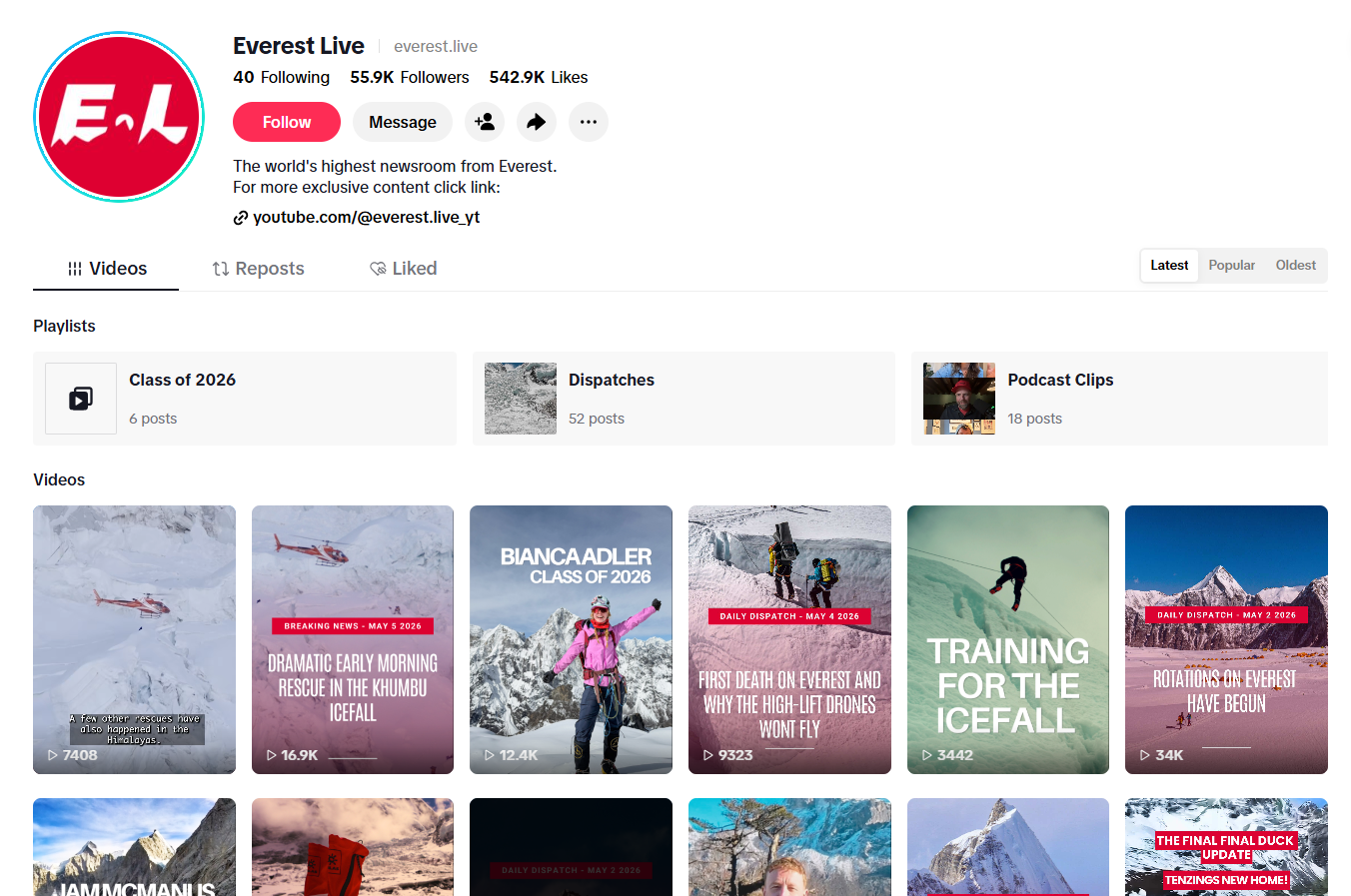
Everest Live update account on TikTok
Among that content is Bianca Adler. Bianca is an 18-year-old climber who is currently attempting to become the youngest Australian to summit Mt Everest. Across her social media accounts, she shares all about the different mountains she has conquered and the ongoing journey to reach the highest summit.
Last year, she went viral on TikTok after her first attempt to summit Mount Everest. In one of her videos, Bianca appears to be in rough shape as she explains that she had to turn back during her summit push due to extreme weather conditions. She inspired many concerned viewers to take an interest in her story. Some encouraged her to try again, others expressed their gratitude that they weren’t in her shoes, and some criticized her for even attempting to climb the mountain in the first place.
This year, she is embarking on her second attempt to reach the summit and is happily providing updates on her journey to all her supportive (and unsupportive) followers.
With great coverage comes… a lot of judgment
People watching the Mount Everest climbing experience from the comfort of their own couches love to express every single opinion they have about the whole ordeal. Remember the mystery of the mountain? Well, there isn’t a great deal of it left now that coverage of the mountain finds its way to social media every single day.
These days, people know exactly what happens on the way to the mountain, how much it costs, and how long it takes. The truth gets uncovered through all the layers of ice, and many people have a thing or two to say about it. Suddenly, people are much more reluctant to congratulate those who manage to reach the top, as challenging as it may be.
There are many reasons behind the criticism. First, there is the cost. It takes tens of thousands of dollars to fund an Everest expedition, which is preceded by months, if not years, of training. Every climber who shares their climbing experience online is met with curious and judgmental queries about how they were able to afford it in the first place.
Second, there are the Sherpas. A group of local Nepalis who get paid to climb the mountain alongside the climbers. The Sherpas are constantly documented carrying the climbers' belongings, assembling bridges on top of icy ravines, and enduring the tough conditions of the mountain, all for a paycheck many deem not enough for this life-risking experience.
Third, there is the mountain itself. Every climbing season, expeditions leave the mountain worse off than they found it, either with waste, forgotten flags, or themselves (if you know, you know). That information finds its way to Everest-Tok alongside the accomplishments, which leads many to believe that the mountain would be much better if it were left alone.
These reasons are just the tip of the iceberg, or should I say mountaintop? The more glimpses we get into what actually goes on up there, the more the criticism piles on.
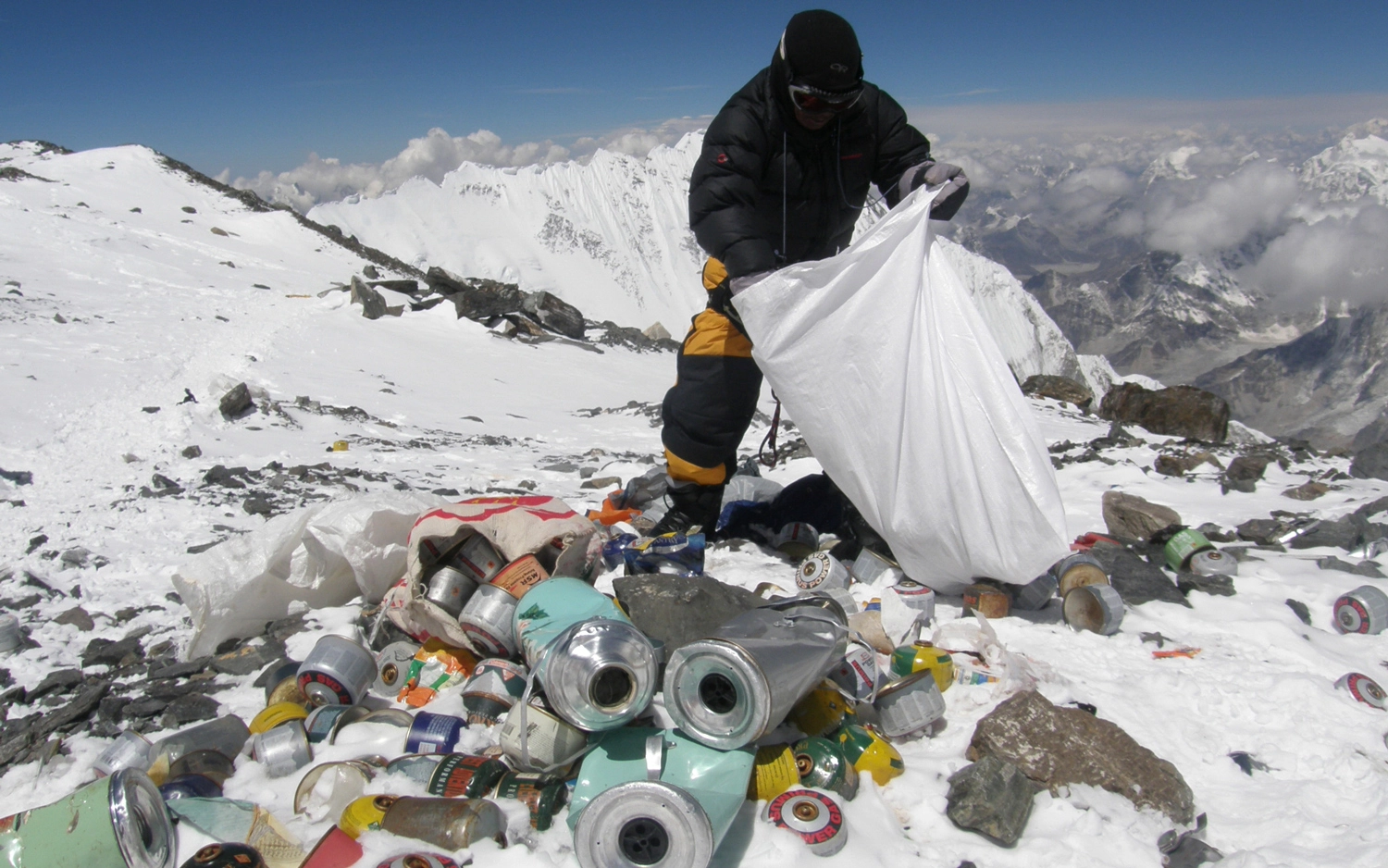
Via Jorr1t
#Everest2026
The 2026 Everest climbing season took off a couple of weeks ago, and the climbers already had a rocky start, as a dangerous icefall prevented them from leaving Everest Base Camp and beginning their acclimatization process. By the time the path finally cleared, thousands of restless climbers gathered in the base camp, and the smaller window of time to safely reach the summit is now threatening to cause an actual traffic jam on the mountain.
Since every single update from the mountain is shared by update accounts and climbers alike, some Everest enthusiasts view these setbacks as a clear sign. Every video on Everest-Tok now has a comment claiming this rocky start to the season is actually a sign from Mother Nature that it’s time to stop disturbing the mountain. With every criticizing comment making its way to social media, it is becoming clearer that the mystery of Mount Everest is quickly dissipating. A huge element of the mountain’s charm was the unknown, and now that social media is uncovering the icy truth about Everest and its climbers, the audience is less enthusiastic about supporting their journey to the top.
Unless the mountain actually grows a mouth and tells humankind that it’s time to stop pushing to reach the summit, there will always be people who want to climb it. While it’s safe to assume people don’t risk their lives simply so they could have a cool picture to post on social media, there is still a reason behind their need to document every step they make on their way to the top. So, if climbers want to climb in peace, it would be better if they keep all their footage to themselves and bring the mystery back to the highest mountain in the world.
